THE ORIGIN OF A SYSTEM

From Corporate Security to Academia
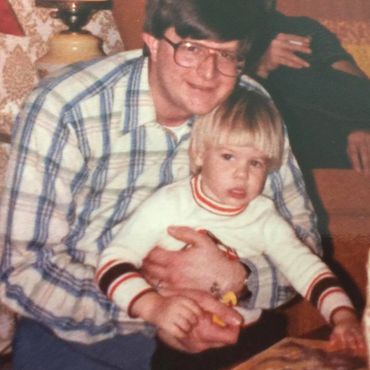
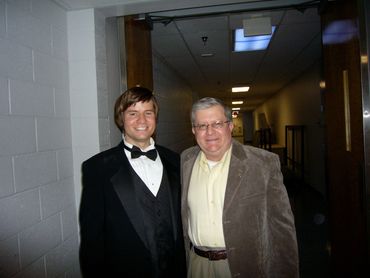
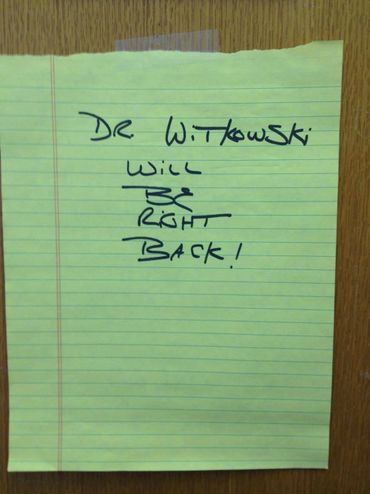
My father, Michael J. Witkowski, Ed.D., spent much of his career studying how psychology shapes leadership—first inside Ford Motor Company’s global security division, and later as a professor of criminal justice, sociology, and organizational leadership at the University of Detroit Mercy.
His doctoral research exposed a simple but devastating pattern: leadership systems were quietly engineered around a very narrow psychological profile.
And that homogeneity shaped everything—how people were trained, who advanced, and whose intelligence was overlooked.
Most corporate and security leaders shared the same cognitive and emotional tendencies: rigid, authoritative, avoidance of nuance.
Systems built around those traits naturally rewarded people who matched them—and sidelined those who didn’t.
Some individuals rose effortlessly.
Others—no less capable—were chronically misread, undervalued, or forced to contort themselves to survive.
He studied the problem.
I’ve built the structure to solve it.
His unit of analysis was the individual inside the system.
My unit of analysis is the system itself:
its incentives, its architecture, and how it behaves under pressure.
The cost of uniform thinking
His findings made clear what happens when a narrow group of personality types become the default for leadership: systems grow brittle, punitive, and unable to hold the very people they claim to serve.
Sound familiar?
After completing his doctorate, my father left the corporate ladder for academia. For more than two decades, he taught criminal justice, leadership, and sociology—not to reinforce the structures he had studied, but to give future leaders the tools to improve them.
My father believed systems thrive only when they are built to honor different kinds of people, diverse learning styles, many ways of knowing, and all voices being heard.
His dissertation documented who leadership systems were designed for.
My work reveals why those systems collapse for everyone else who doesn’t fit the mold.
He didn’t have the era, the technology, or the diagnostic tools to build a full solution—
That’s where I come in.
TWO DISSERTATIONS — ONE THROUGHLINE

This isn’t the first time I’ve traced the early architecture of a system.
In my own 2011 doctoral research on Carl Loewe, I mapped how this lesser-known composer from Northern Germany quietly foreshadowed the dramatic, structural innovations Richard Wagner would later make famous.
My father did the same in organizational psychology.
We were both identifying precursor structures—just in different languages.
The Lucrativity System™ is where those two lines finally converge.
His work documented the monoculture.
Mine builds the architecture that finally makes monoculture unnecessary.
Where He Found Dysfunction, I’m Architecting Correction
My father exposed the psychological rigidity of power structures.
The standardized business practices of today—especially online—are simply the latest iteration of the monoculture my father identified in 1989.
Different tools, same suppressive architecture.
I now help clients build income architectures that don’t just survive such power dynamics—they bypass them.
Systems that work for intuitive, creative, emotionally attuned entrepreneurs and leaders—the very people power structures too often exclude.
Where he studied who leadership excluded, I now help build income models that include those same minds by design, not exception.
Where He Theorized Type, I'm Monetizing Alignment
Typology tells you who is in the system.
Architecture tells you what the system does to them.
He believed personality and learning style mattered.
I turned that belief into diagnostic tools and frameworks that don’t just analyze people.
They help people earn in alignment with who they are—no contortion required.
Where He Taught Leadership, I'm Leading Structural Freedom
He stood in the classroom.
I stand in the fire with clients whose income, safety, and self-worth have been undermined by systems just like the ones he studied.
He taught students how to navigate systems.
I teach leaders how to rebuild them.
He believed in education.
I believe in transformation grounded in structure.
The Dissertation He Began, I Am Completing
His research wasn’t an isolated curiosity. It was an early signal of a broader truth: systems built for one kind of mind will always collapse under the weight of human diversity.
He asked,
“What happens when leadership only looks one way?”
I answered,
“What if income, voice, and power could finally be built to reflect who we actually are—without contortion, burnout, or erasure?”
He held the question.
I built the response.
He taught students how to think about systems.
I'm now helping students, entrepreneurs, creators, and industry-shifting professionals realize how they can build new ones.
I am not just my father’s son.
I am his structural continuation.
Because some questions take two generations to answer.
THE VOICE CARRYING IT FORWARD

My Own Journey Through Flawed Systems
Part of what drove me to study vocal performance—and ultimately earn a Doctor of Musical Arts—was an intuitive knowing:
I was singing inside systems designed to suppress the talent of people like me.
I didn’t just want to survive it.
I wanted to beat it.
Vocal music may have been a contrasting field to my father’s—and with very contrasting typologies.
But the dynamic was the same:
Academic and artistic systems that rewarded compliance, flattened nuance, and erased the very brilliance they claimed to cultivate.
I didn’t know it then, but I was studying the same architectural problem my father had—only through melody, tension, and dramatic form instead of statistics and typology.
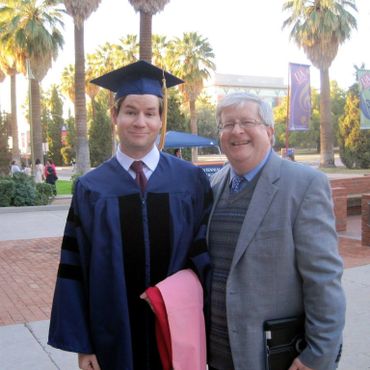
My doctoral research explored the lesser-known German Romantic composer Carl Loewe. My dissertation covered his piece Gregor auf dem Stein—a dramatic ballad cycle rooted in themes of exile, transformation, and spiritual return. It was a foreshadowing of the evolution of music in the Romantic era.
I Thought I Was Analyzing Music
In reality, I was studying how structure carries emotion under pressure—and how a voice reveals the truth a system can no longer contain.
It was the artistic mirror of the psychological question my father had asked decades earlier.
That same tension now lives in my work with entrepreneurs: building frameworks that don’t suppress power, but hold it.
My father studied the system.
I studied the song.
This business carries both.
His research gave language to the problem.
My music gave voice to it.
Together, they became the behavioral and structural foundation of a system that could finally measure what he could only describe.
Two dissertations, 22 years apart, unknowingly tracking the same phenomenon:
what collapses under pressure, and what holds.
His lens was typology.
Mine was vocal structure.
The Lucrativity System™ is the synthesized intellectual convergence.
What he couldn’t finish, I’m now scaling.
His work continues to live on in mine—refined, embodied, and applied.
Where he warned, I rewrite.
Where he diagnosed, I design.
Where he stopped at the podium, I stepped into the marketplace.
This business doesn’t just reflect my voice.
It carries forward his legacy.
It took me a while to realize that I wasn’t just building a business—
I was carrying forward my father’s unfinished work.
I was the next chapter.
And if you’ve ever felt like the system wasn’t built for you—
It’s because it wasn’t.
You're not too sensitive.
You're not too complicated.
You're not too ambitious or too much.
You're just trying to build a life inside a structure that doesn’t know how to hold you.
That’s not personal failure—it’s structural misfit.
And structural misfit is solvable.
This work is for people like us.
People who feel deeply, think rigorously, and want to earn without diluting who they are.
That’s who I built this for.
That’s who I built it with.
And if you know someone this was written for—
someone whose brilliance has always lived outside the lines—
don’t keep it to yourself.
This is the infrastructure he never got to see—
but absolutely would have recognized.
From father to son.
From typology to architecture.
From early warning to structural design.
The Lucrativity System™ is the completed line of inquiry his dissertation began.
It's not a departure from his work.
It's the structure that finally makes his original insight operational.
TWO DISSERTATIONS. TWO DISCIPLINES.
ONE UNFINISHED QUESTION—
Completed Across Generations.
The original research that shaped The Lucrativity System™—
from typology to structural architecture.
What each dissertation examined:
My Father (1989):
- Person → role fit
- Typology & learning-style dominance
- How systems reward one psychological profile
- Who leadership structures exclude
Me (2011):
- Voice → structure fit
- How musical form holds emotional truth
- What systems try to erase
- How structure liberates or suppresses power
US (2025):
Assumptions → incentives → behavior → income
Structural congruence under pressure
Architecture that holds diverse minds, not just dominant types

The Psychological Typologies and Learning Styles of Security Managers in a Large Industrial Organization

READY WHEN YOU ARE...
Step directly into the private partnership designed to recalibrate how you earn, ask, and lead — with full clarity and structural support:
Book a one-time Business 4D Diagnostic Session using The Lucrativity System™ to get a full snapshot of what’s working, what’s misfiring, and what to do next:
If you're not sure, or you would like to explore a more custom option: